
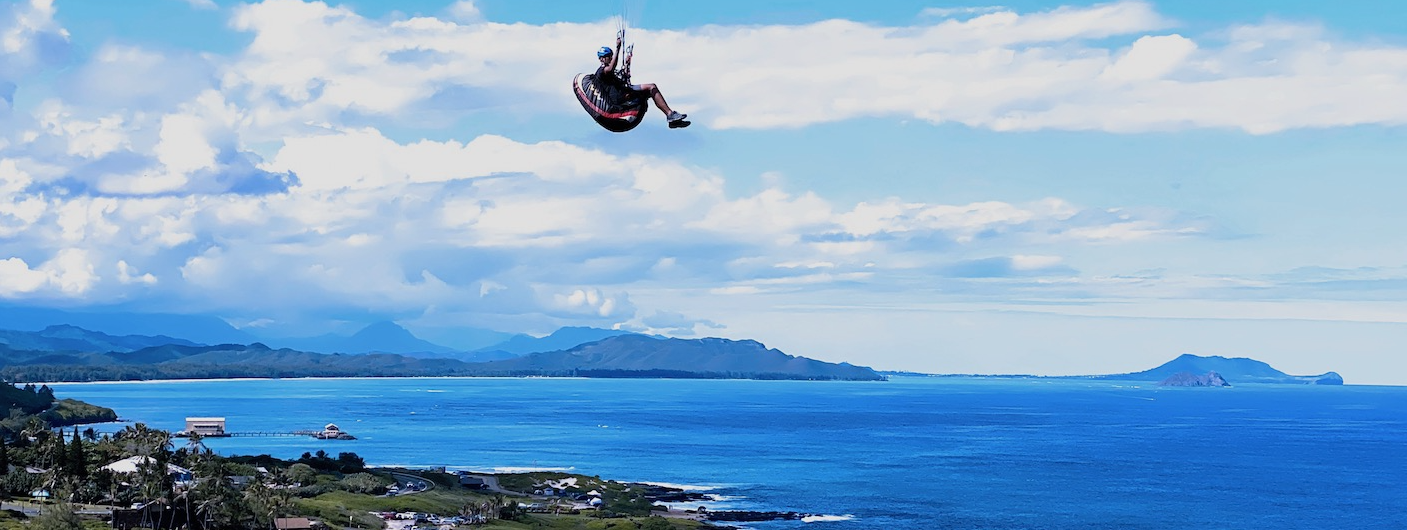
What are boundaries?
You might think this is a silly question because everyone knows what limits are. But are you really sure?
Just looking into the Duden does not provide any clarity, as it describes two meanings with different characteristics:
- 1 A. Strip of land (marked by corresponding markings) that separates political entities (countries, states) from each other
- 1 B. Dividing line between areas owned by different owners or separated by natural features
- 1 C. only imaginary dividing line of different, opposing areas and phenomena or similar.
- 2. boundary, end [line], barrier
Borders therefore define an area and at the same time demarcate it from another area. This is easier to grasp when we talk about geographical borders between countries, parts of countries and cities. Here, living without borders means that you have the opportunity to overcome these borders. This seems possible today in relation to Europe, and for some it may even be easy. However, the actual implementation is often difficult. Below this level, implementation at national level is often already difficult and can fail due to national characteristics. Borderless living becomes much more difficult when you leave the European context and think globally. Then borders are often less permeable and borderless living becomes even more difficult.
The next group of borders are linguistic borders, which can go hand in hand with geographical borders. Living without borders here means that you learn the language of the area where you want to live. Forget everything you've heard about the global importance of English. With English you can certainly travel worldwide. But you can't live worldwide, because you will only be able to live in a country if you can understand, speak and read the local language. The German ghettos in Mallorca are a good example of people who don't live without borders and instead have never left their comfort zone.
If you want to cross geographical and linguistic borders in order to live without borders, you will automatically be confronted with cultural borders that you will cross. By crossing cultural borders, you begin to live without borders and assimilate wherever you are. Crossing cultural borders is often more difficult for Germans than for Austrians and Swiss. Germans often know everything better, Germans prefer to have everything at their destination as it is in Germany. Germans are often not prepared to make the most important investment for a borderless life: “Forget everything you have learned and start from scratch in your destination country.” If you can do this, you have a very good basis for a life without borders.
So far, however, we have only talked about the easy part of crossing boundaries. There are many other borders that are often even more difficult to cross. There are social, linguistic and ethnic boundaries in every society. In Germany in particular, this is an area that has grown rapidly in recent years. Here too, openness and the willingness to engage on both sides of the respective border is required. This will be an ongoing task in Germany over the next few years. However, if you want to live without borders, you now have good opportunities in Germany to train your intercultural skillset in this area.
Most important for you and your development, however, are the boundaries as defined by Immanuel Kant (1724-1804). Kant laid the foundation for the theoretical and humanistic definition of boundaries in his works Critique of Pure Reason, Critique of Practical Reason and Critique of Judgment, among others. In future posts, I will explain in more detail why an understanding of Kant's philosophy can help you to live without limits. Today I'll just give you a quote that can point you in the right direction:
It is so convenient to be immature. If I have a book that makes sense to me, a pastor who has a conscience for me, a doctor who judges my diet for me, and so on, I don't need to make any effort myself. Immanuel Kant
For you, boundaries may lie superficially in the purely real, easily tangible area described first. Here I will show you ways to transcend these boundaries. However, many more boundaries often lie in the area that you are not aware of, that is anchored in your subconscious and from which you live unconsciously on a daily basis.
All your thoughts, judgments and actions are defined and limited by these mostly unconscious boundaries and prevent you from living without limits - even if you would very much like to. You limit yourself every day:
- Your adherence to conventions and beliefs (you don't do that, you can't do that, if everyone did that, where would that lead, that's the way it has to be, there's no other way, etc.)
- Judgments (what is he/she taking out, that is bad, that is good, that is valuable, that is worthless, that is bad, that is wrong, that is right, etc.)
- Your self-limitations (I can't do that, I don't want to do that, I'm not allowed to do that, I've never done that, what do others think about me, what do I think about others, how do I evaluate situations, how do I evaluate feelings, how do I evaluate thoughts and much more).
If you want to live limitless, you will set out on the path. You will deal with your limits, with what I call the Circle of Challenges. You will:
- Finding your limits (Find)
- Experience these limits
- Erase and overcome your limits (Erase)
- Forget your limits (Leave)
This is the FEEL method, which I have been using and living successfully for many years and which I have developed to perfection over 35 years. I have been thinking mainly in English for many years and at the beginning I didn't even realize that this abbreviation was no coincidence. Today I know that the abbreviation is no coincidence, because the abbreviation means “feeling”. Living without limits with the FEEL method brings you into harmony with your feelings and your subconscious because it familiarizes you with a control loop that leads you to yourself.
I will explain how this works, why it works and for whom it works here in the future. I'll take you on an exciting journey. Let me know what you think.
 Deutsch
 English